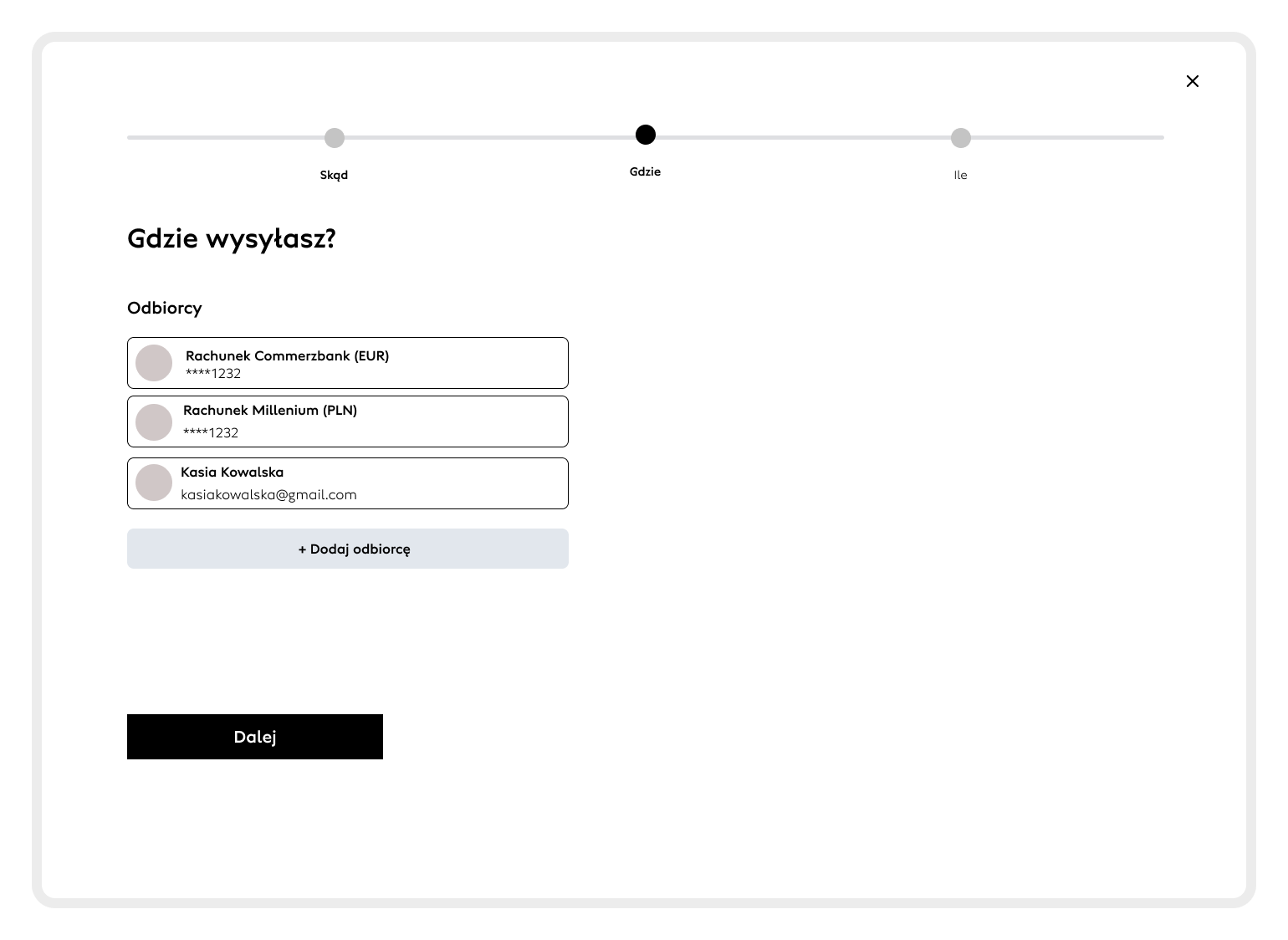
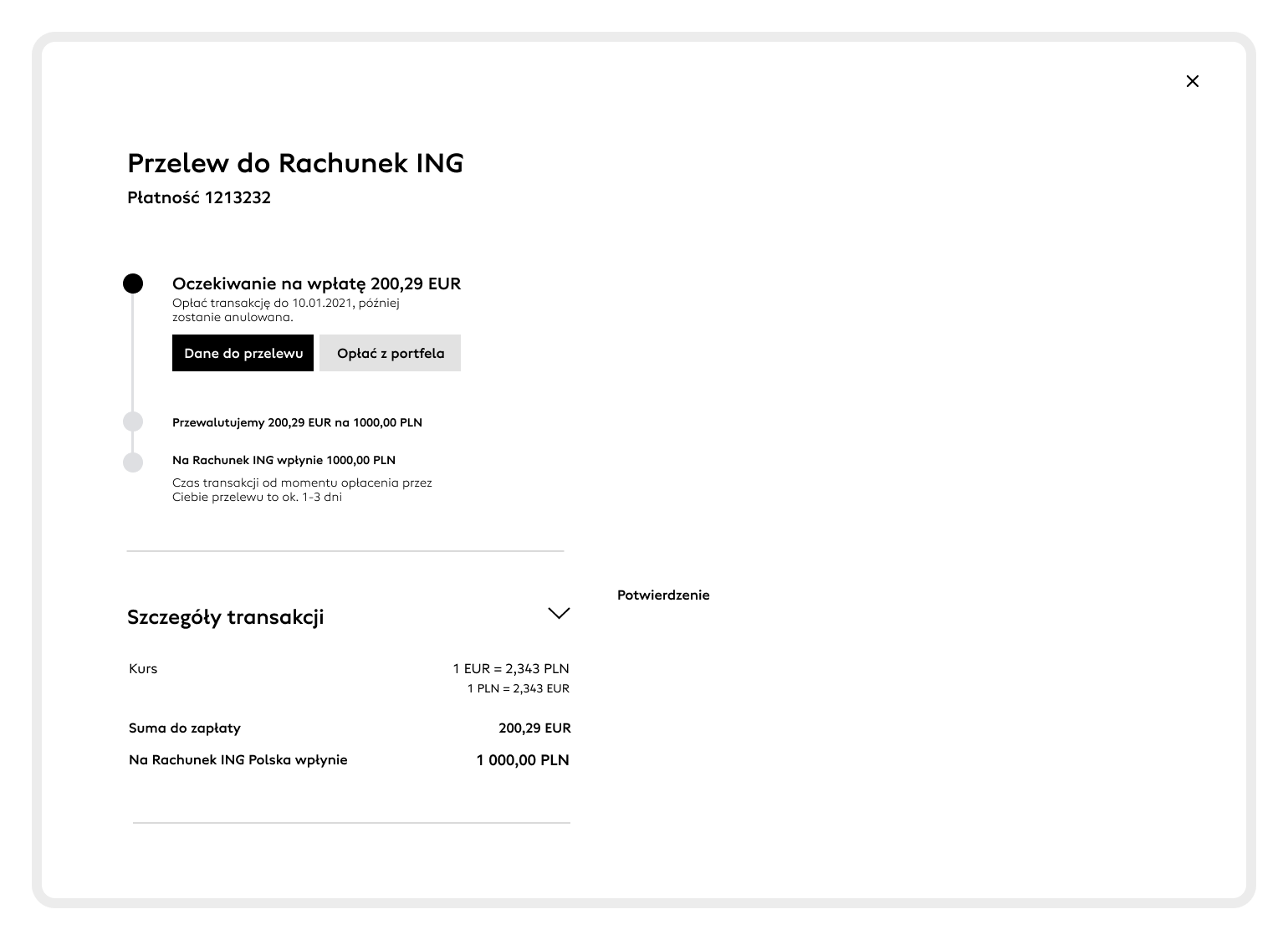
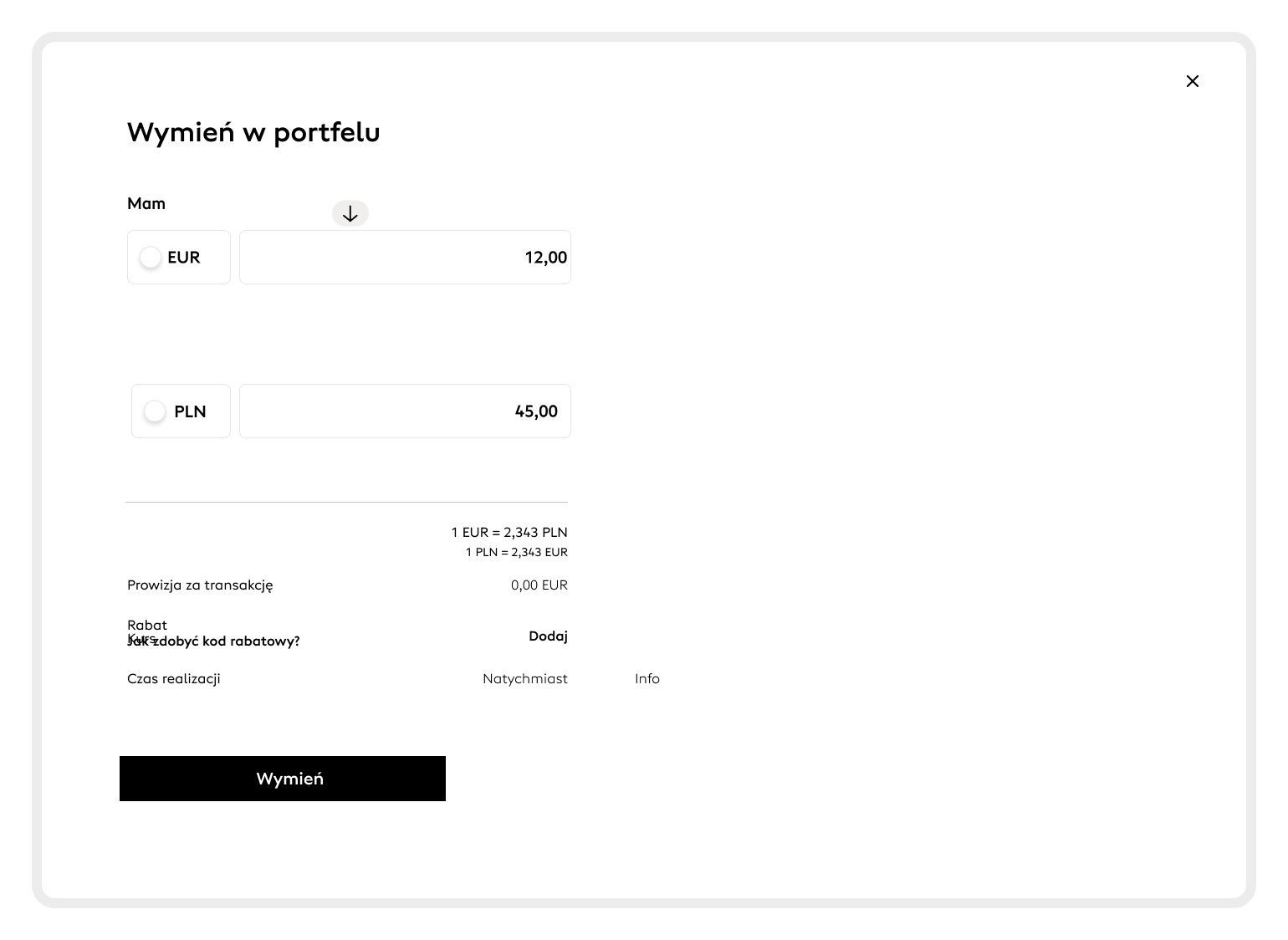
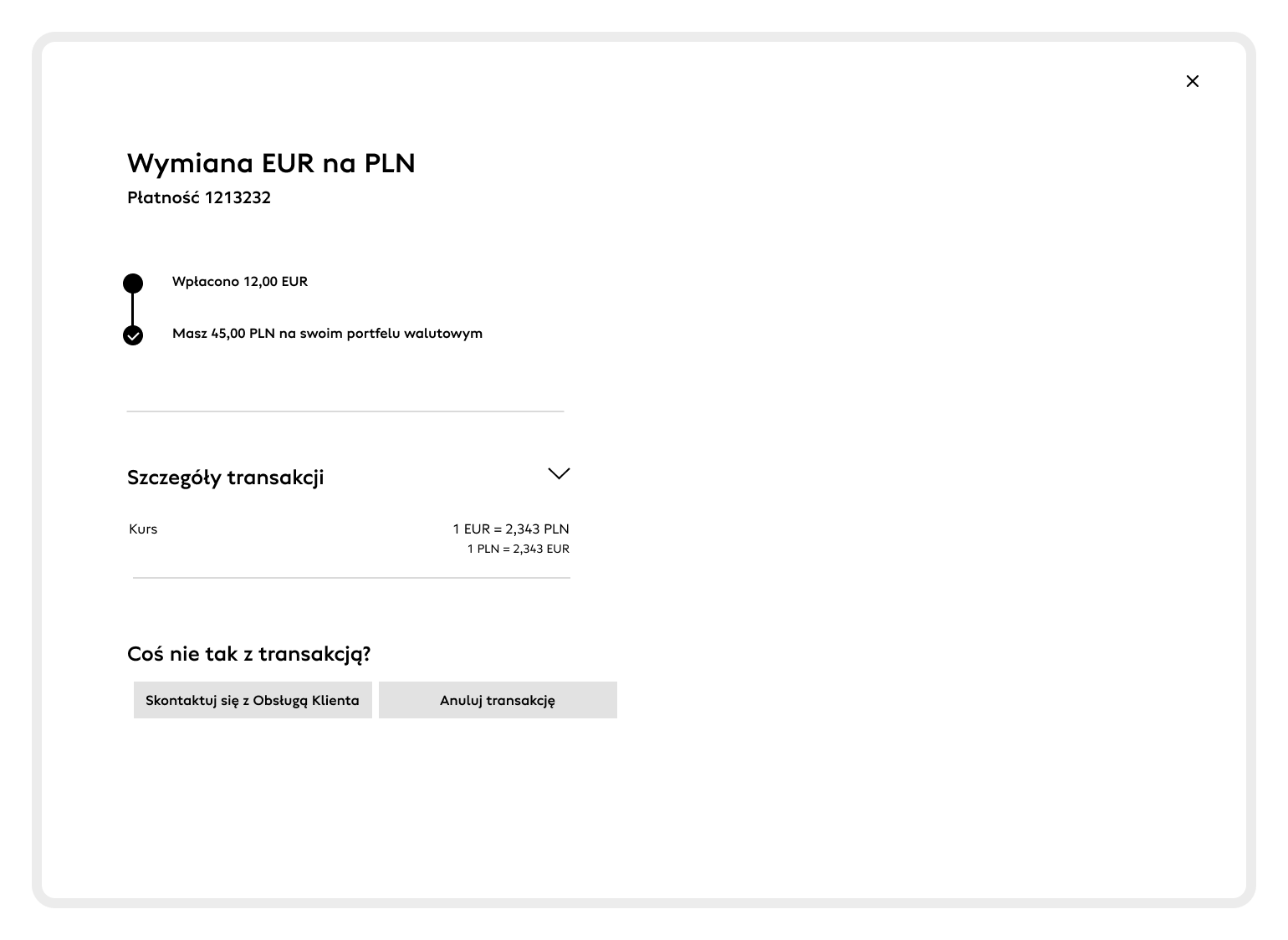
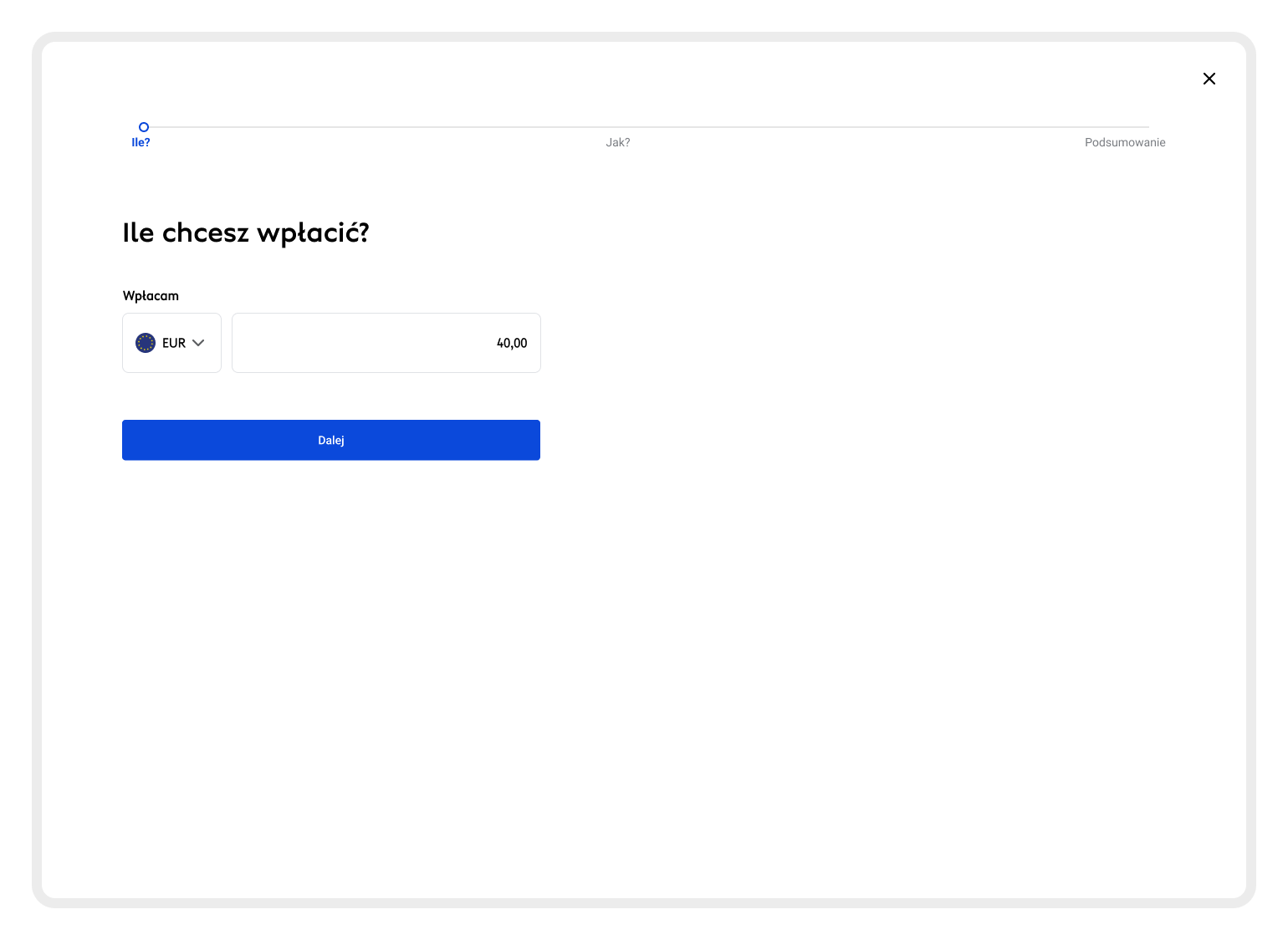
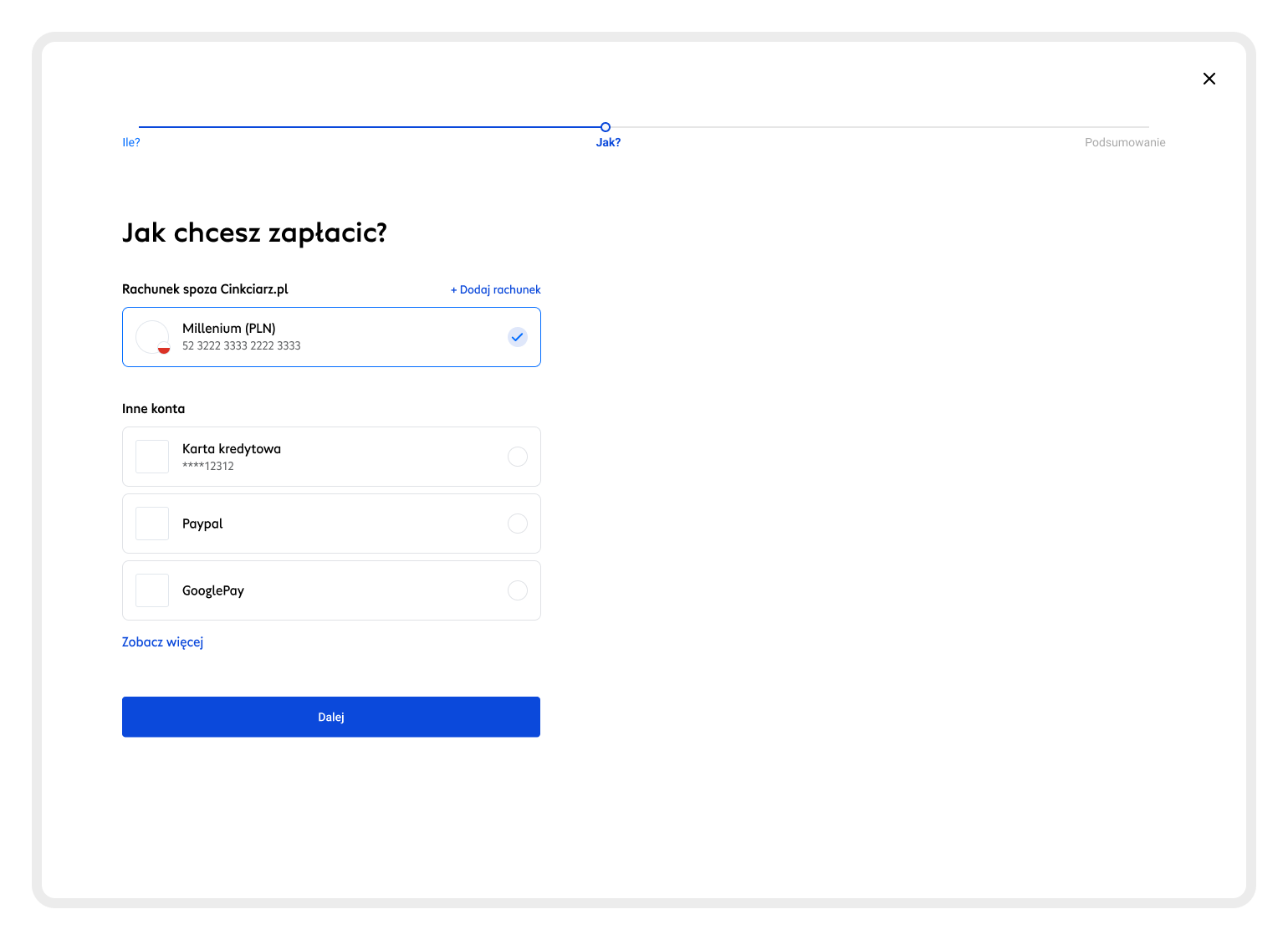
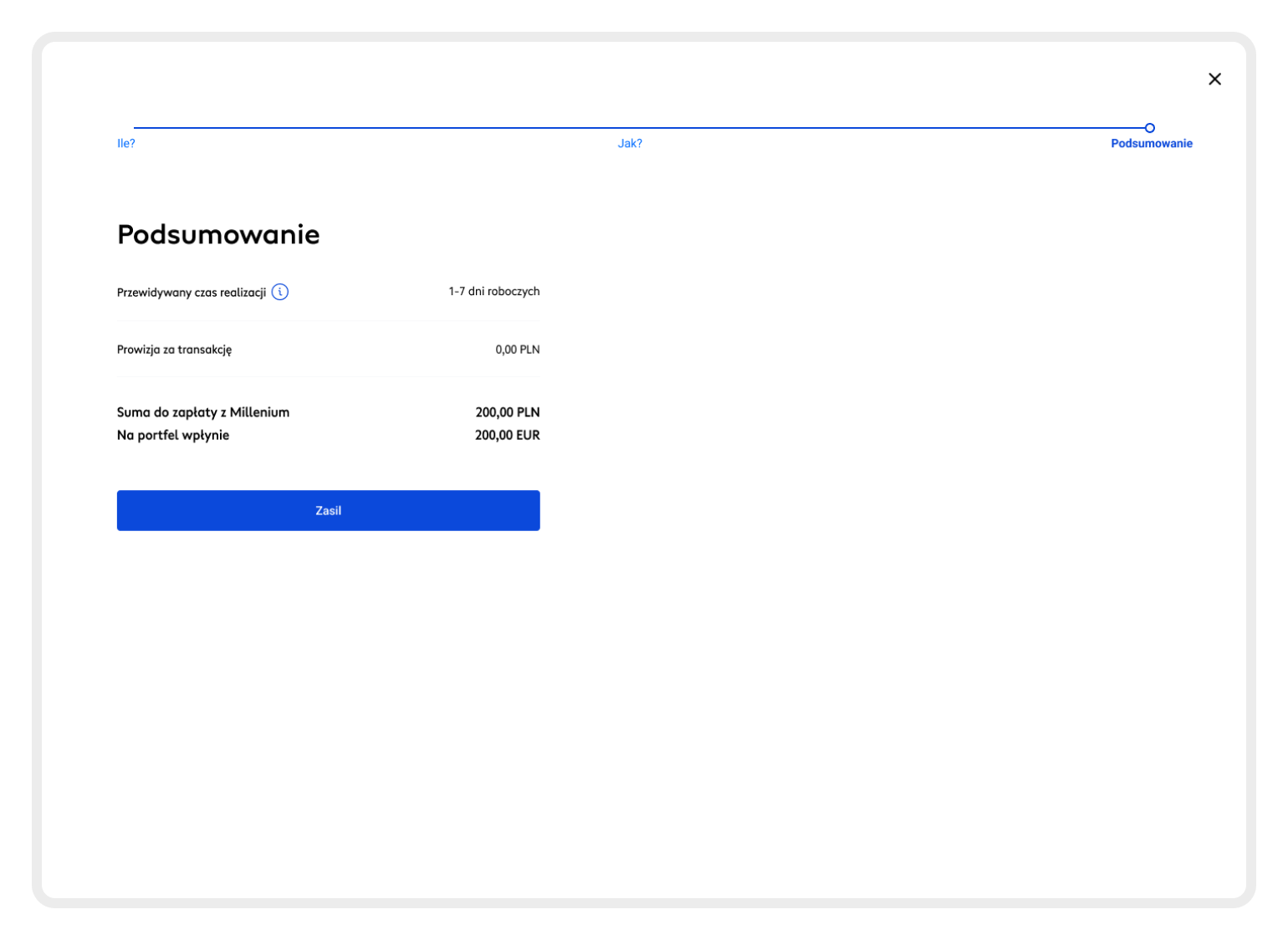
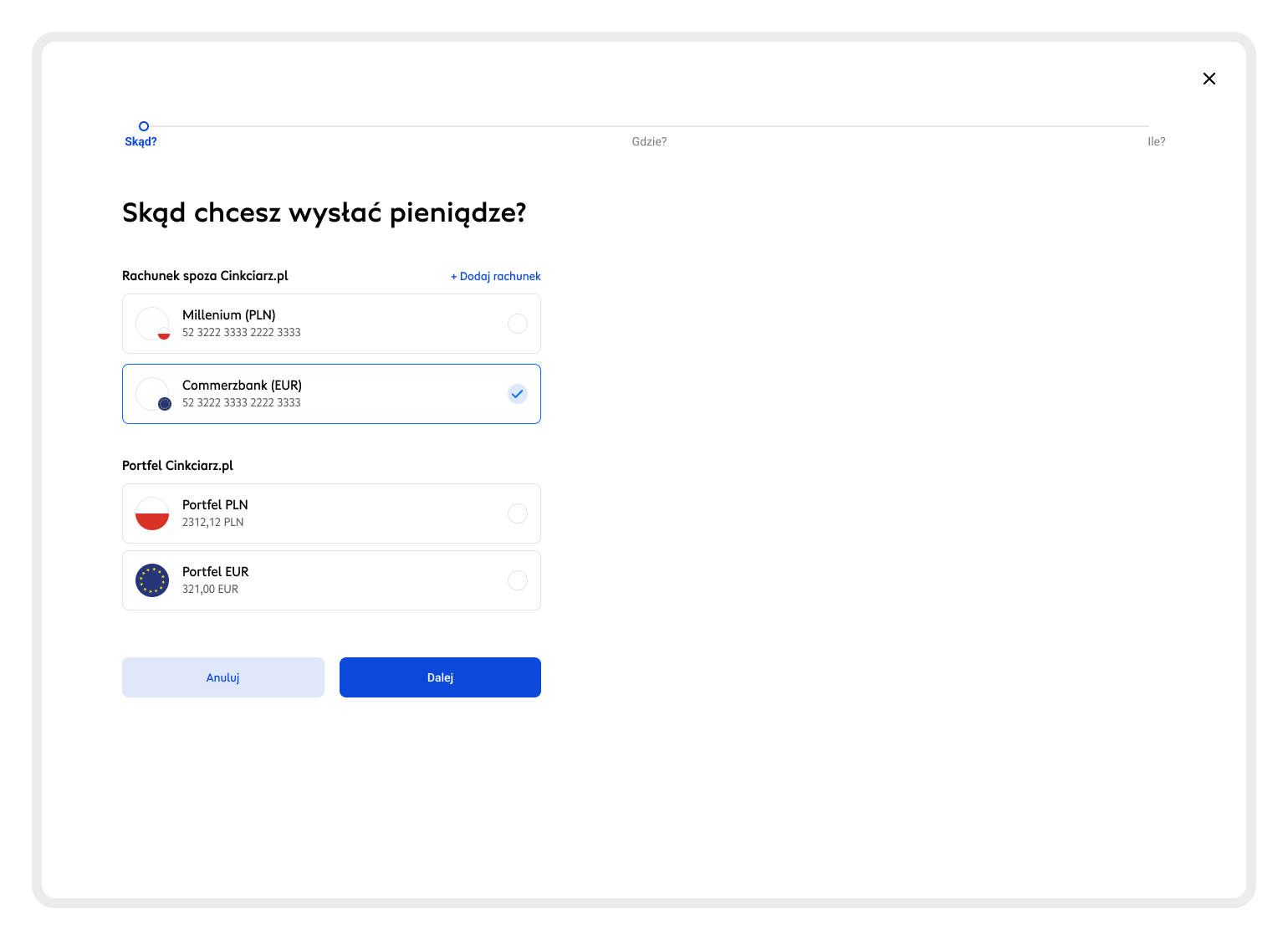
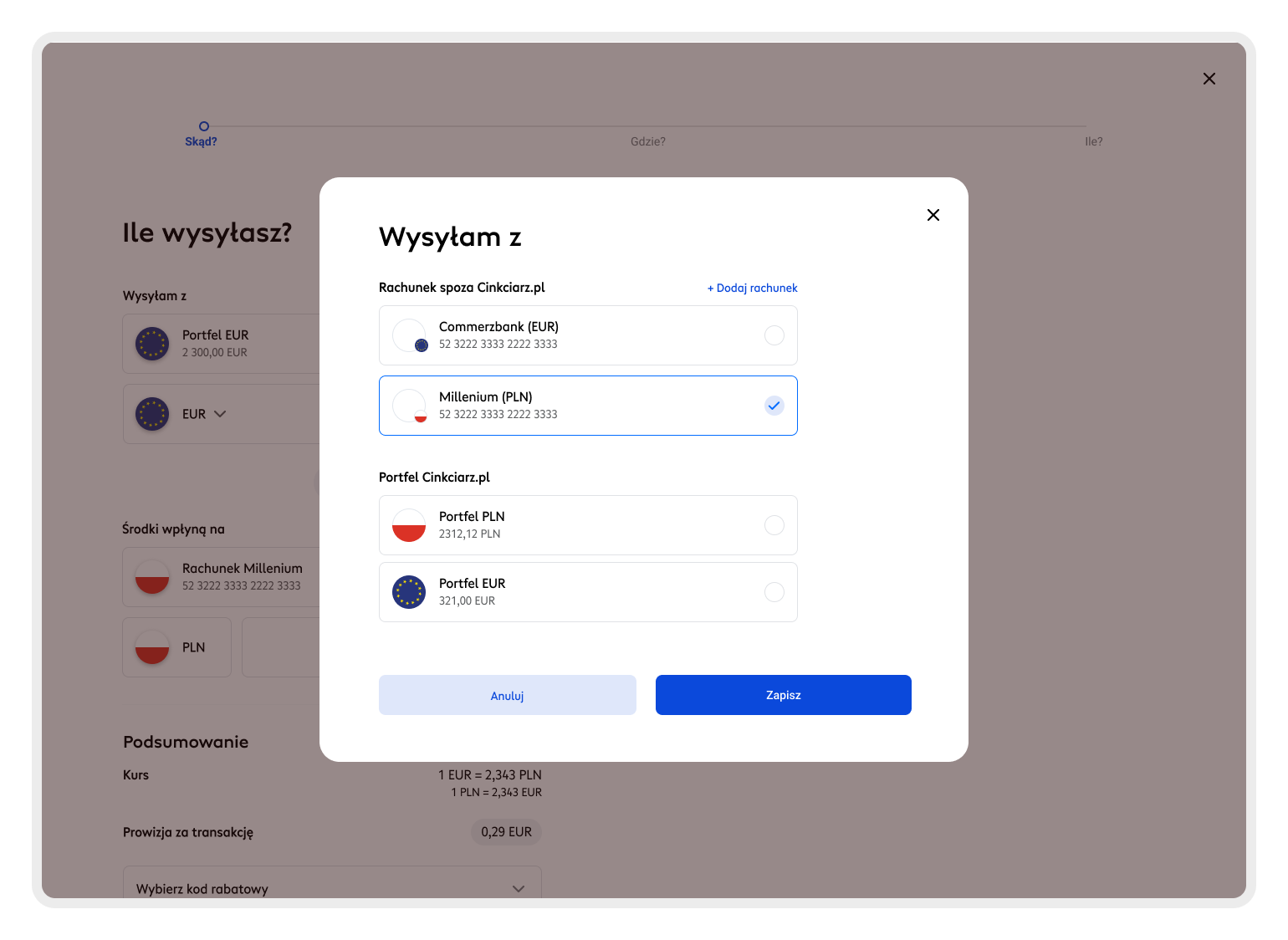
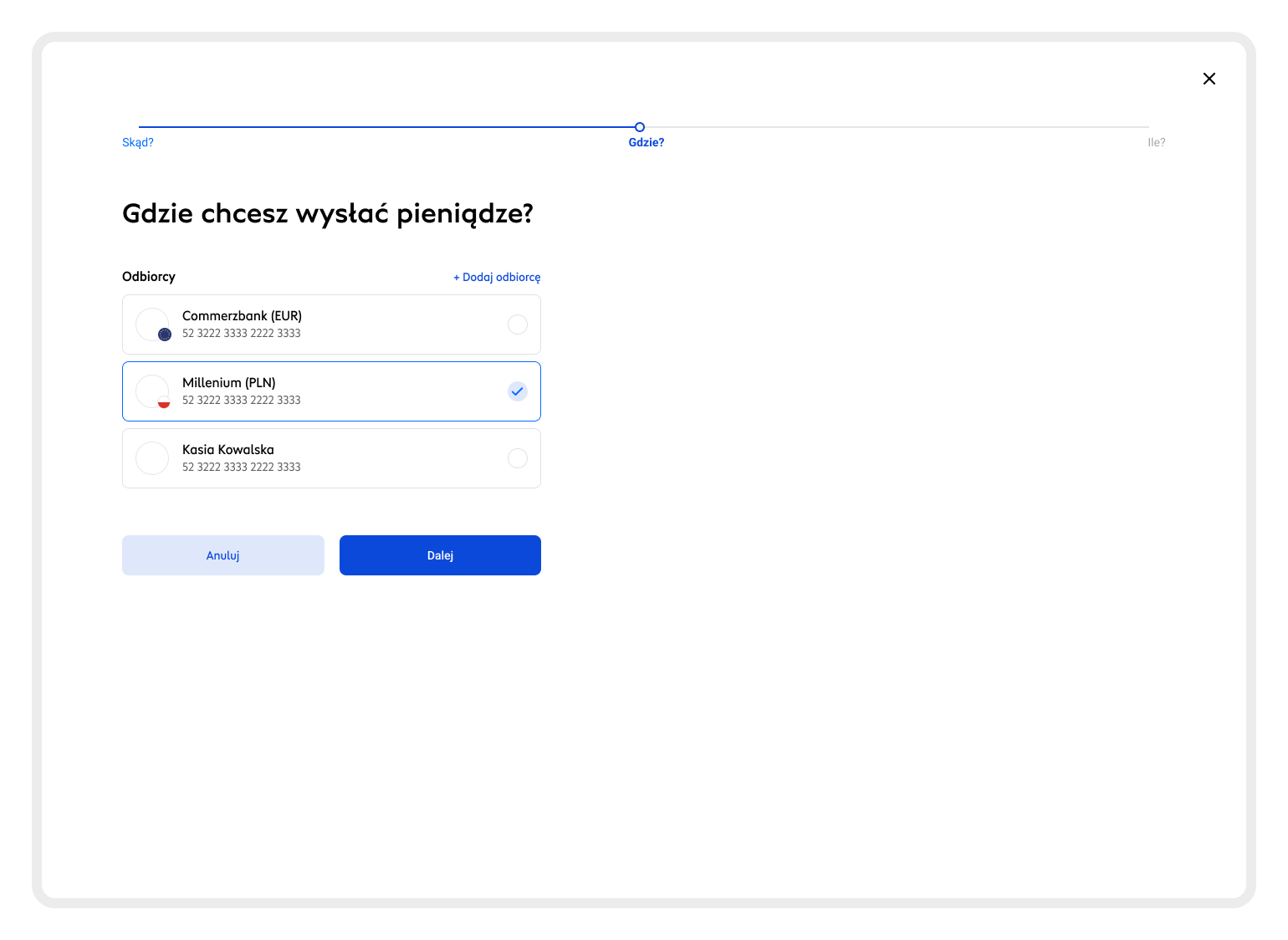
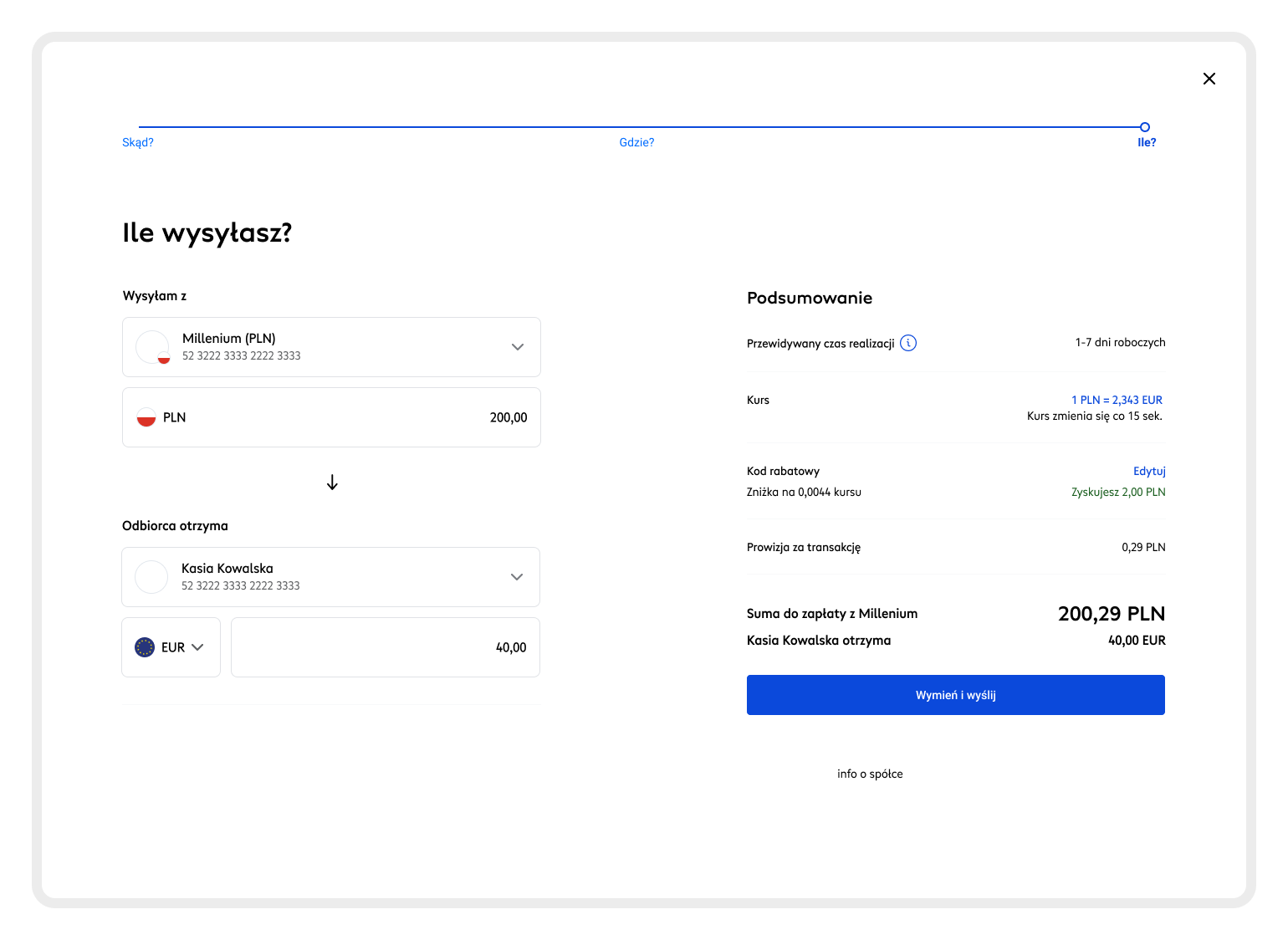
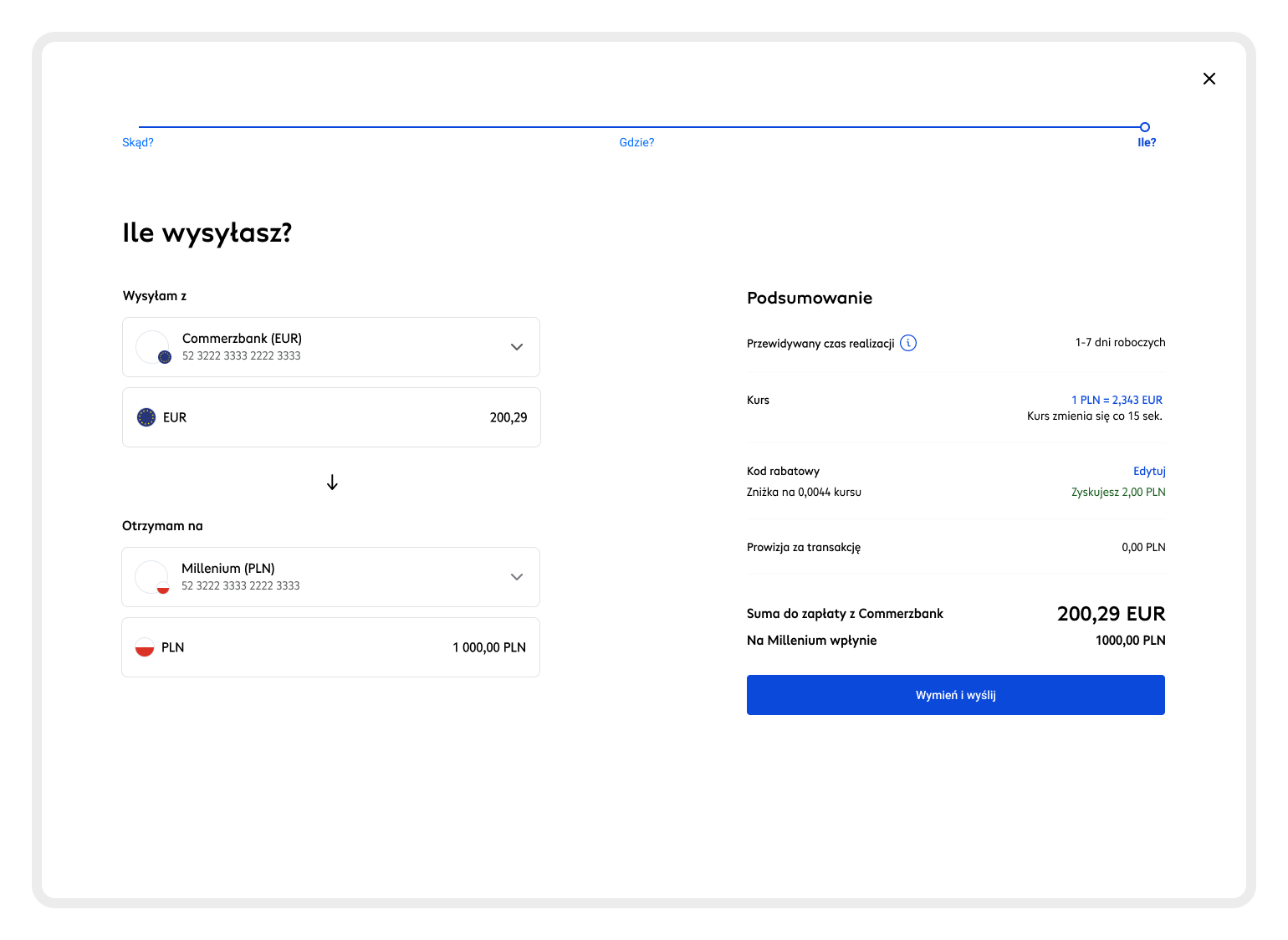
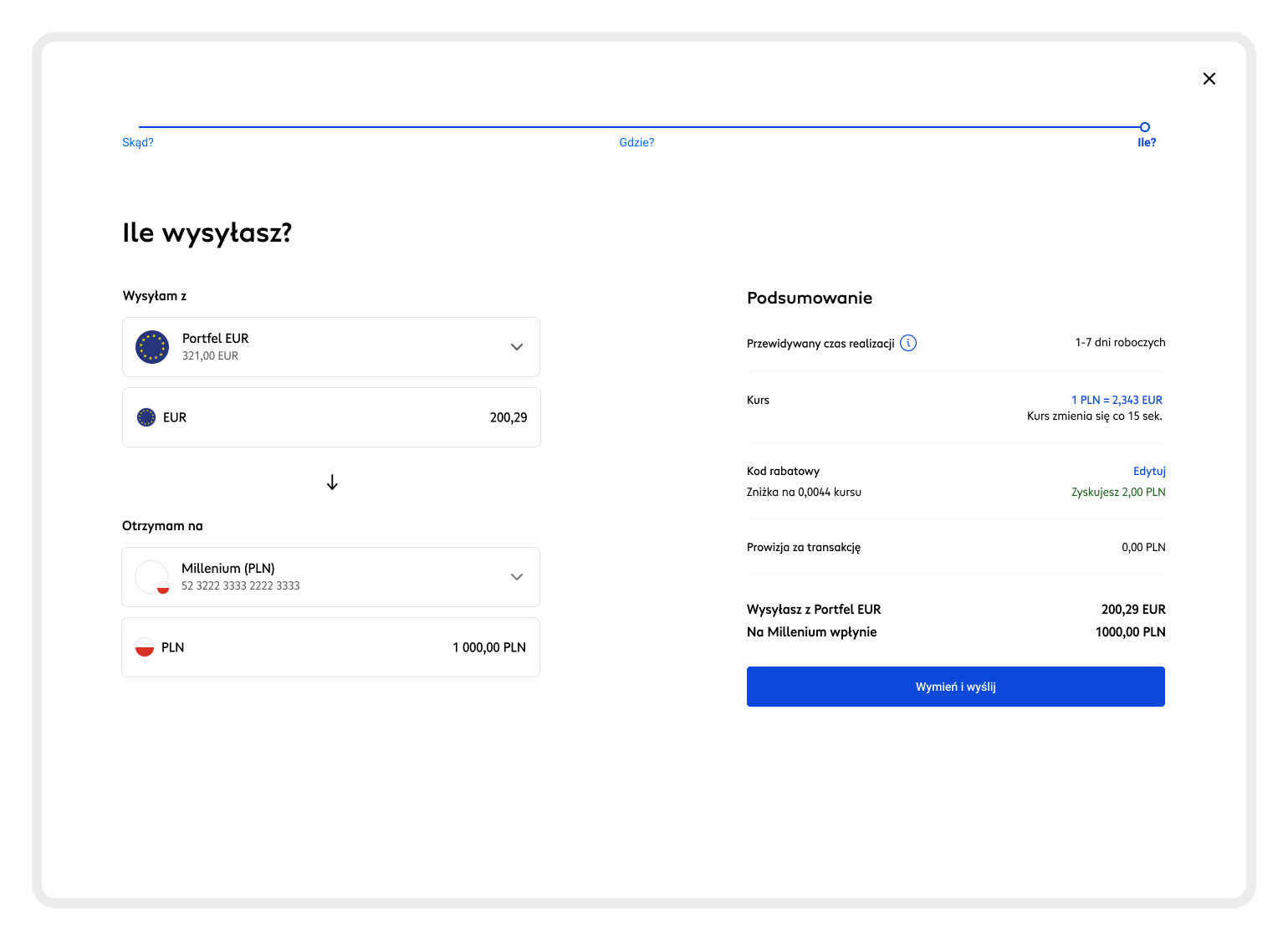
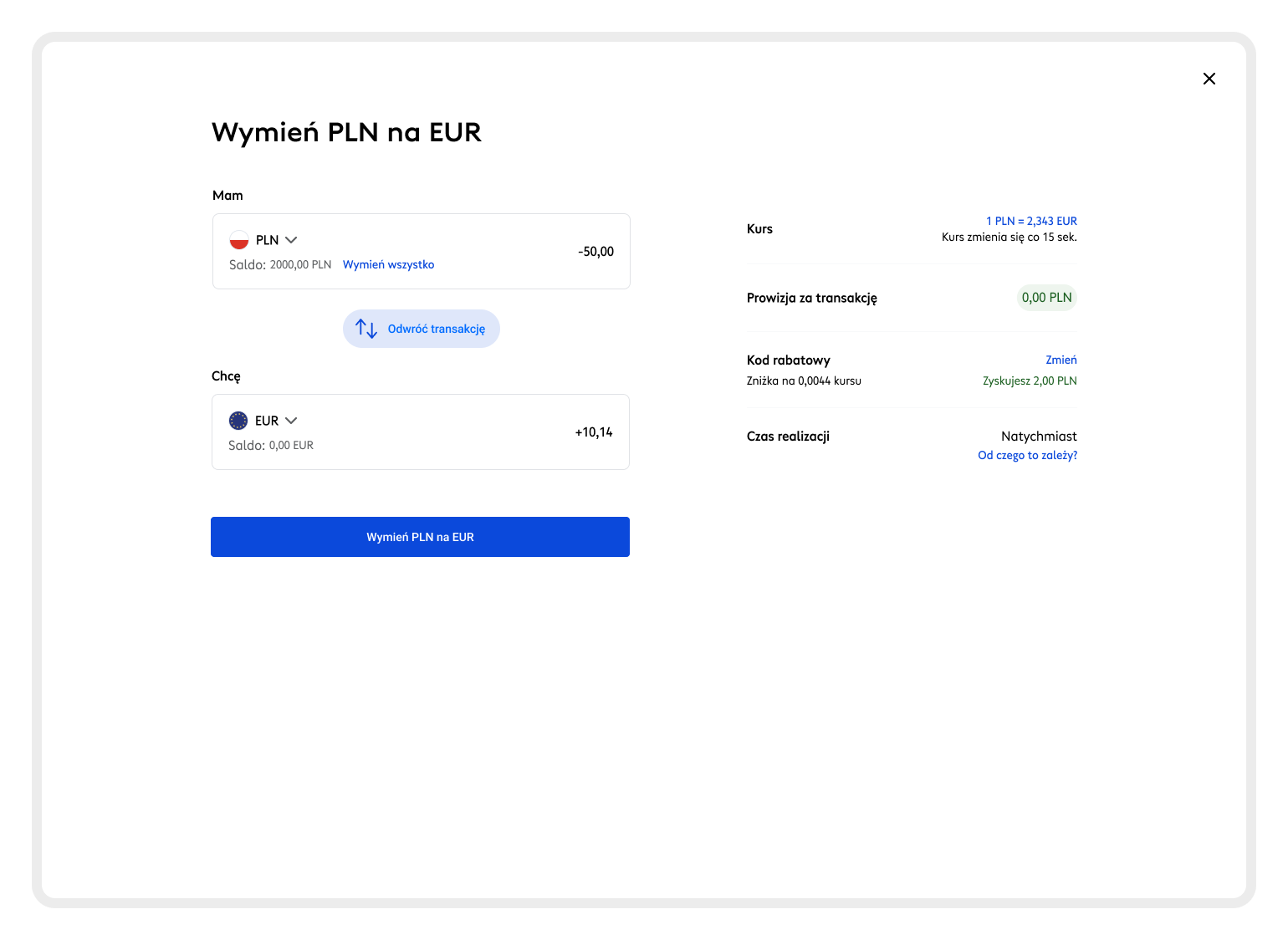
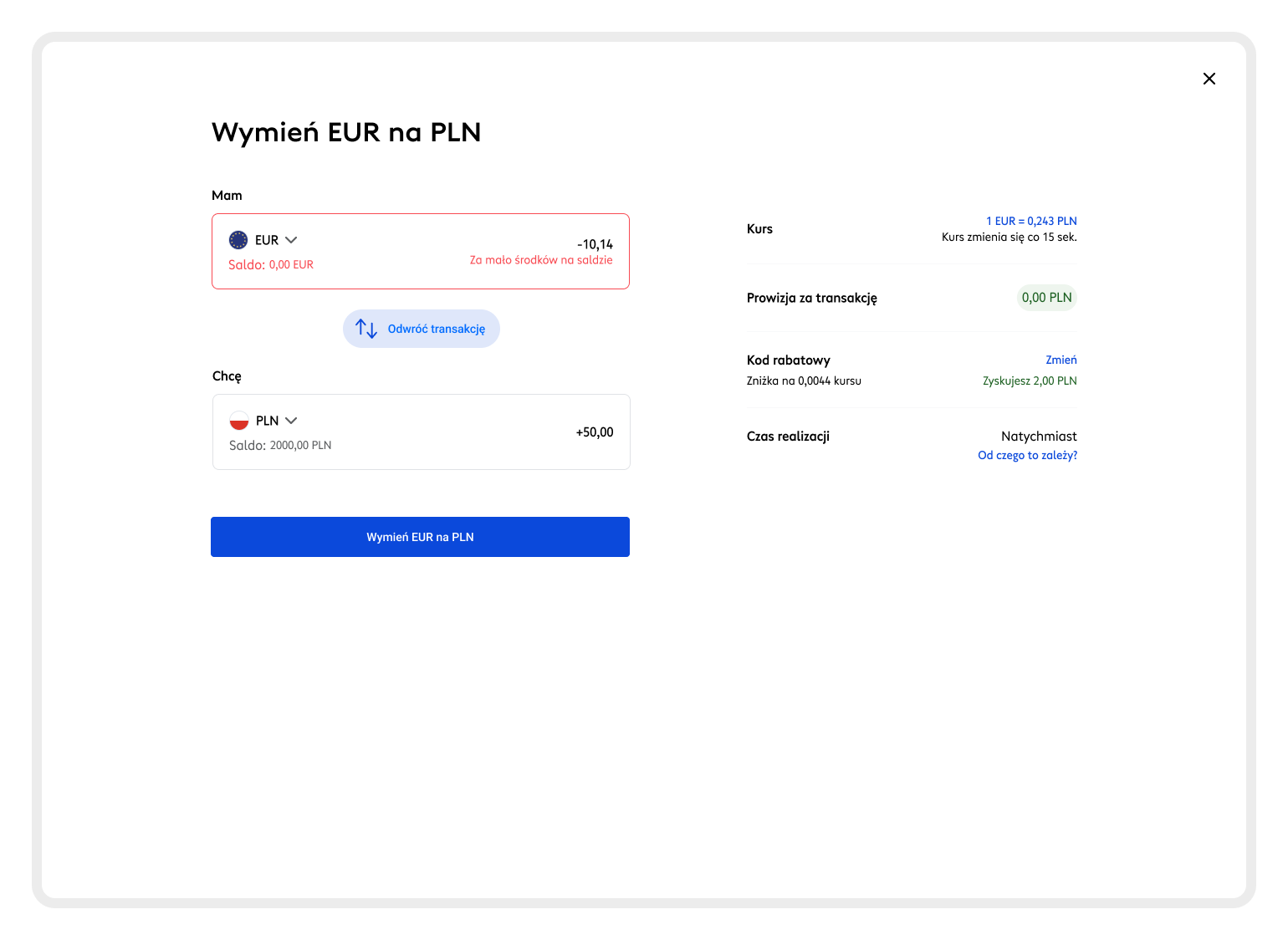
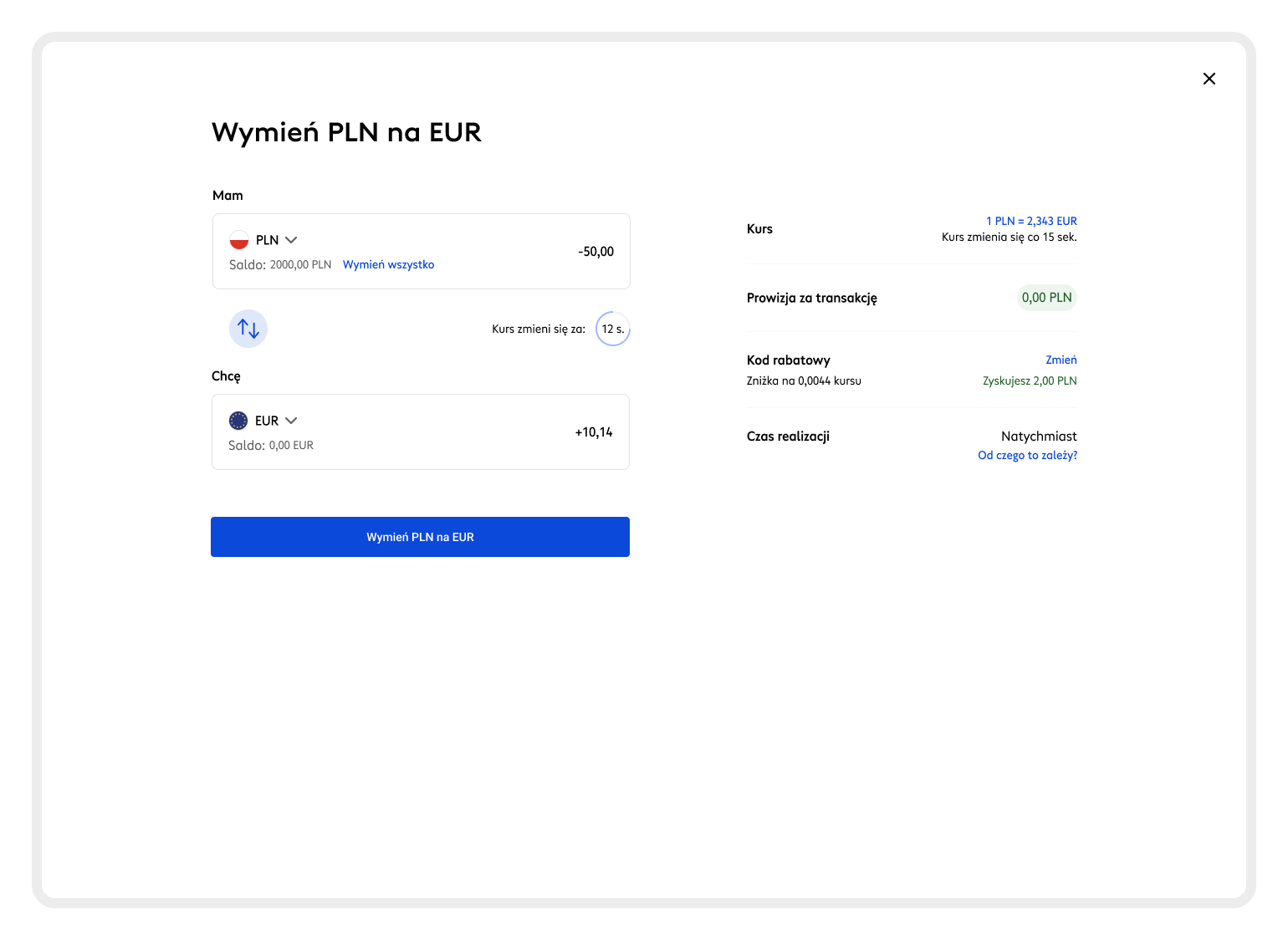
Status: Concept / Not implemented (I became the leader after the previous one left)
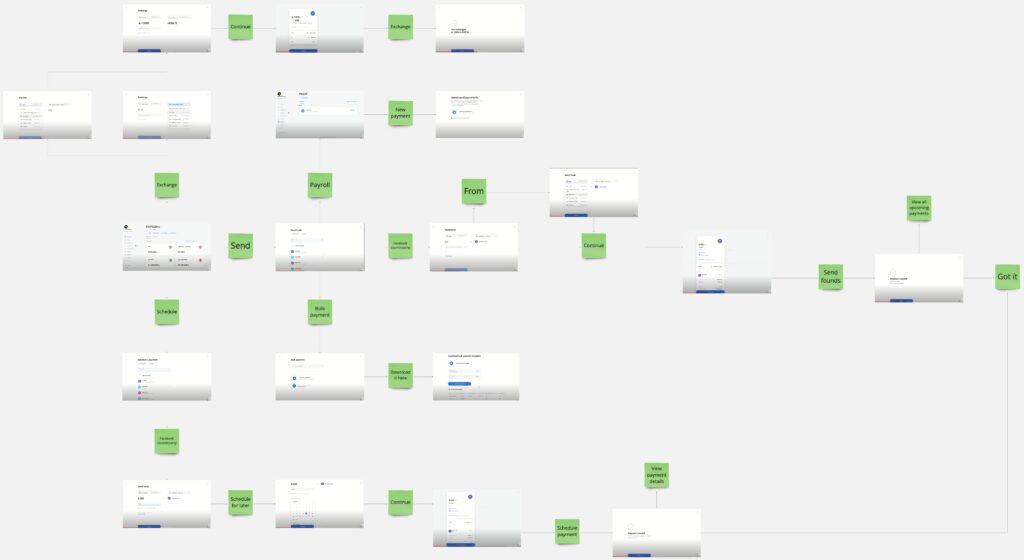
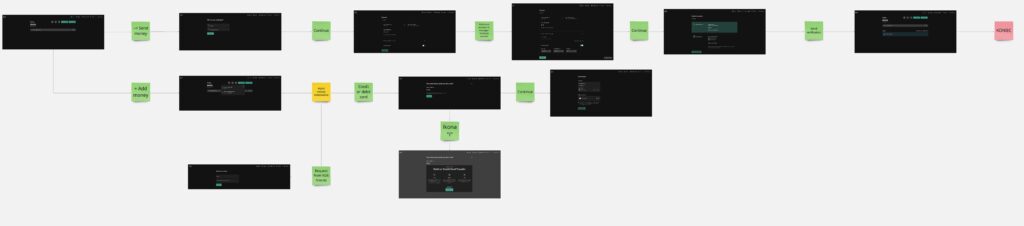
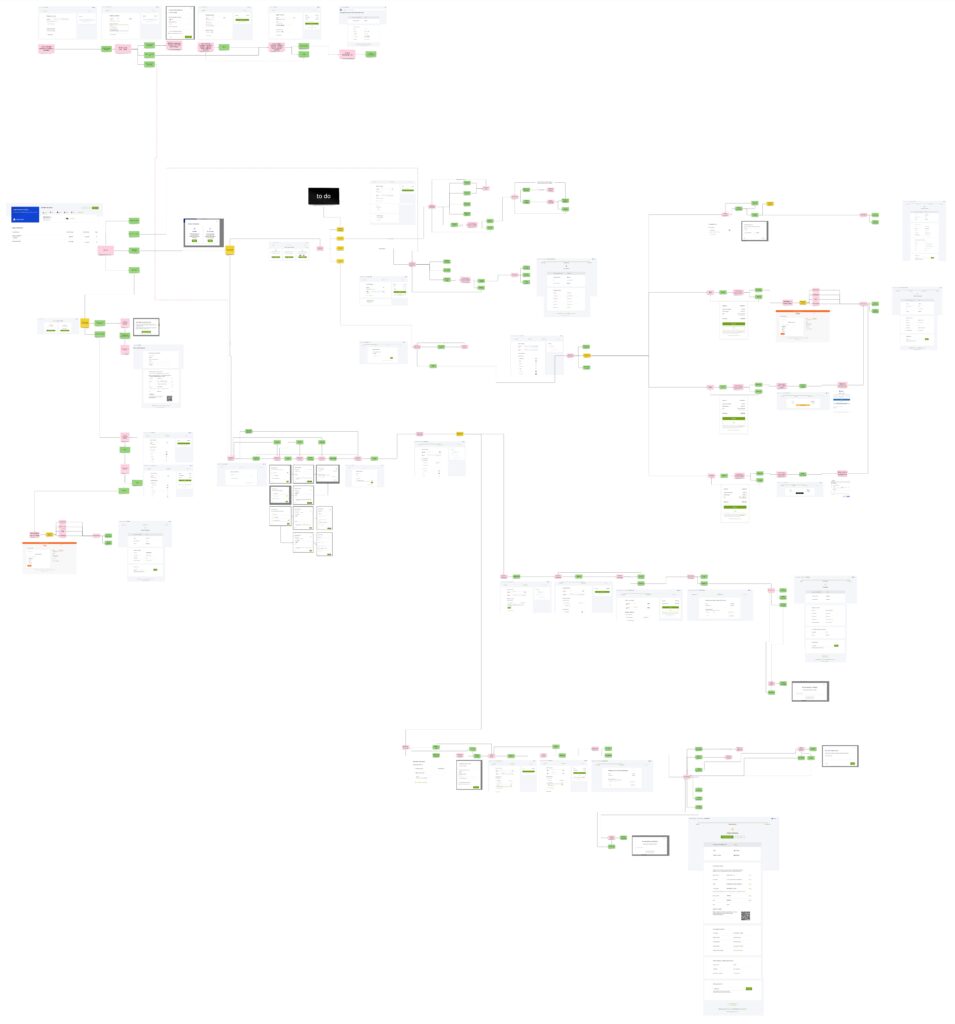
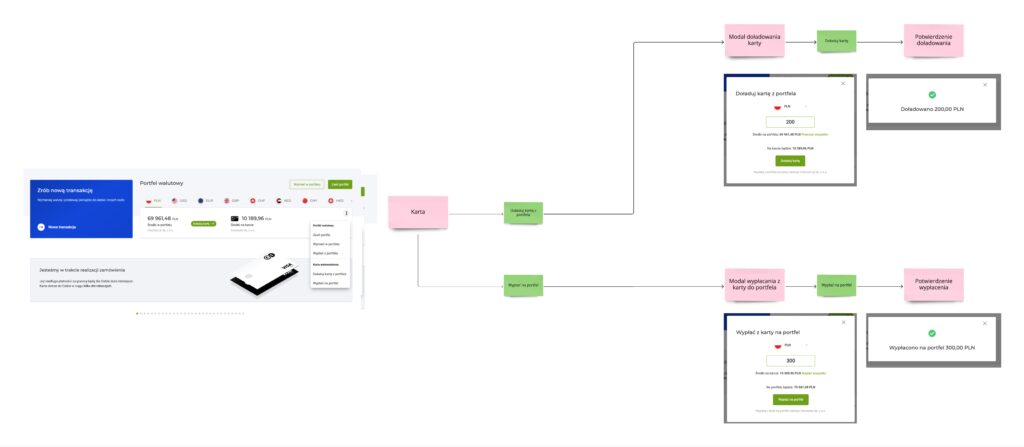
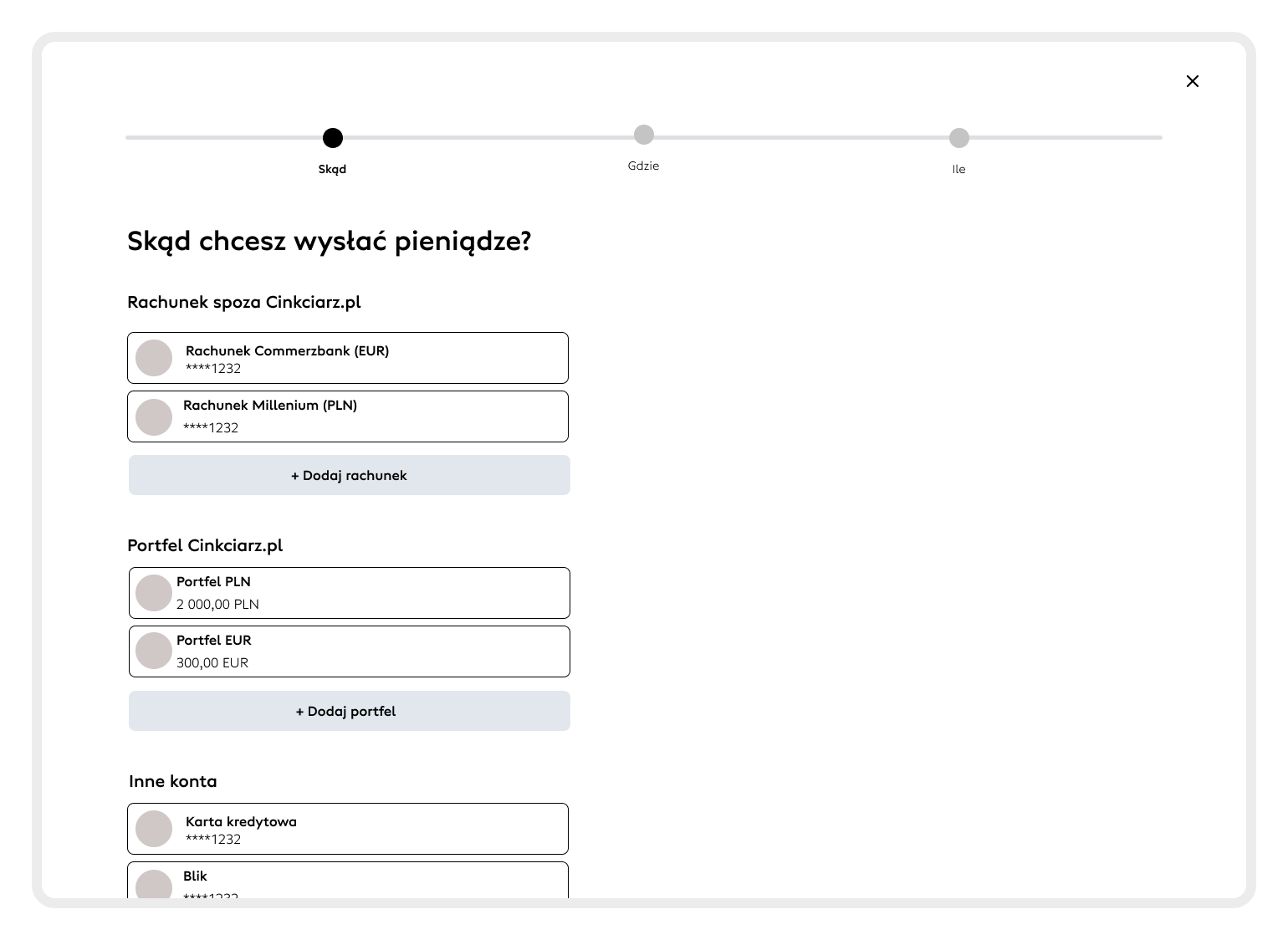
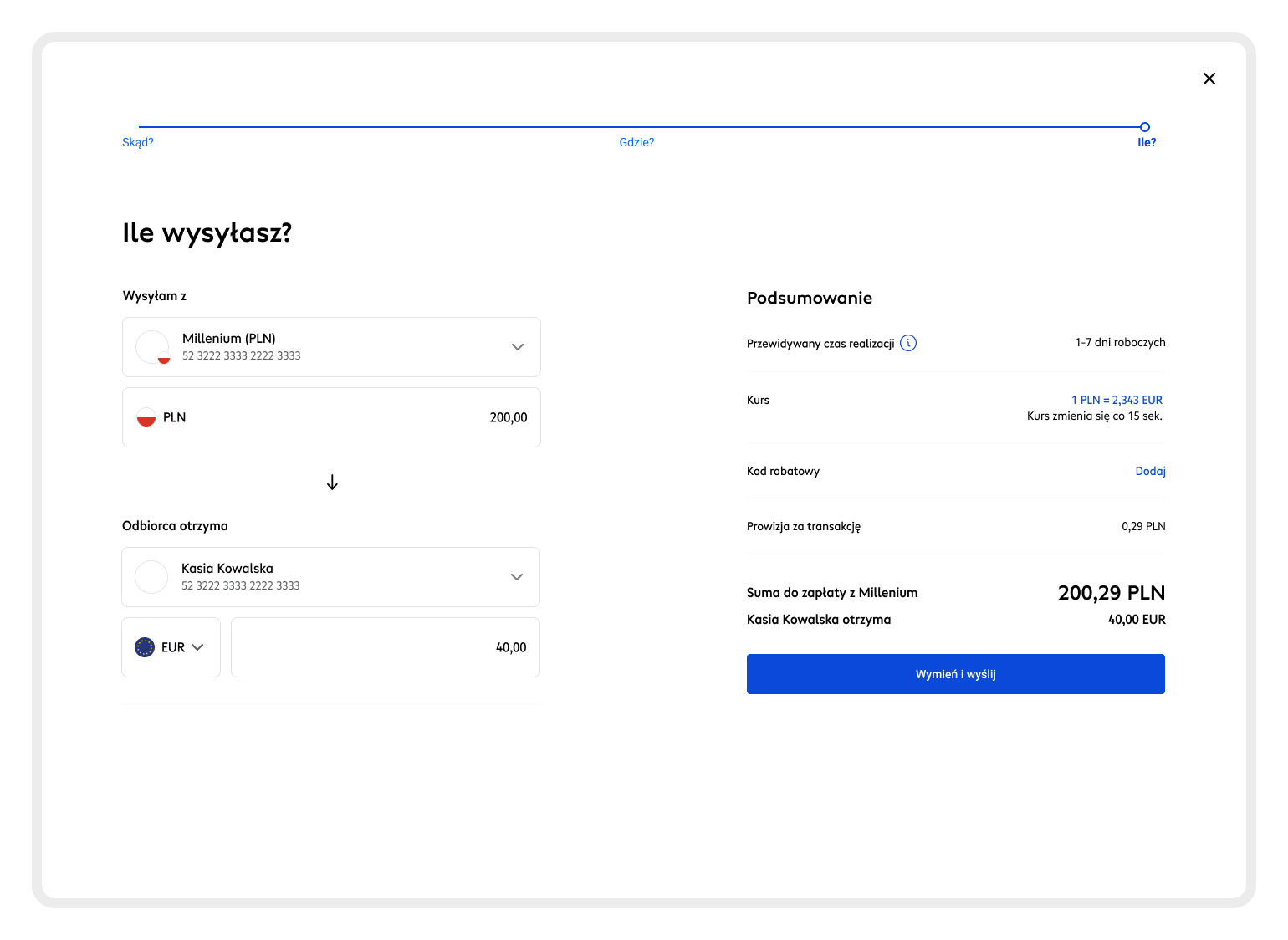
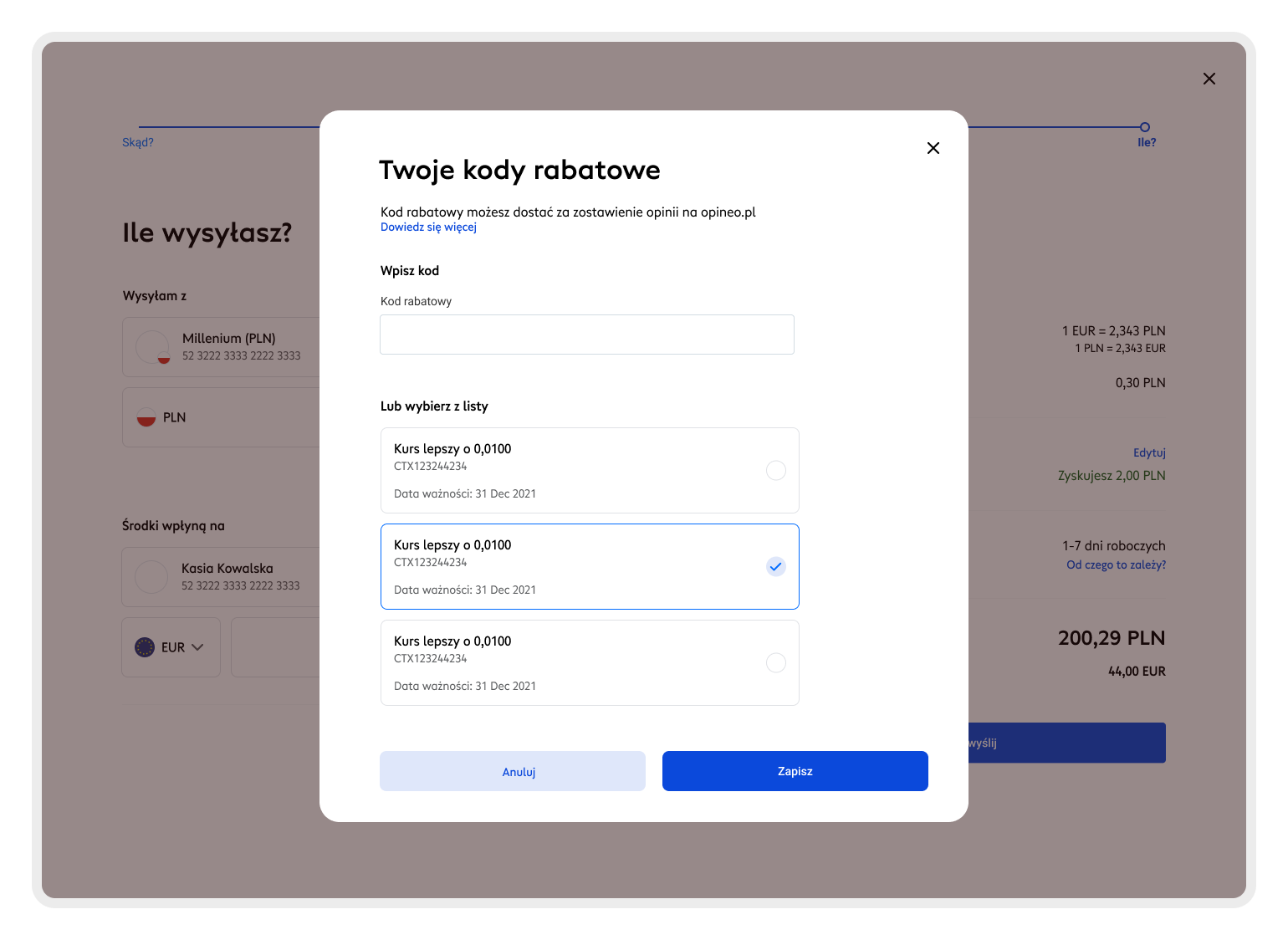
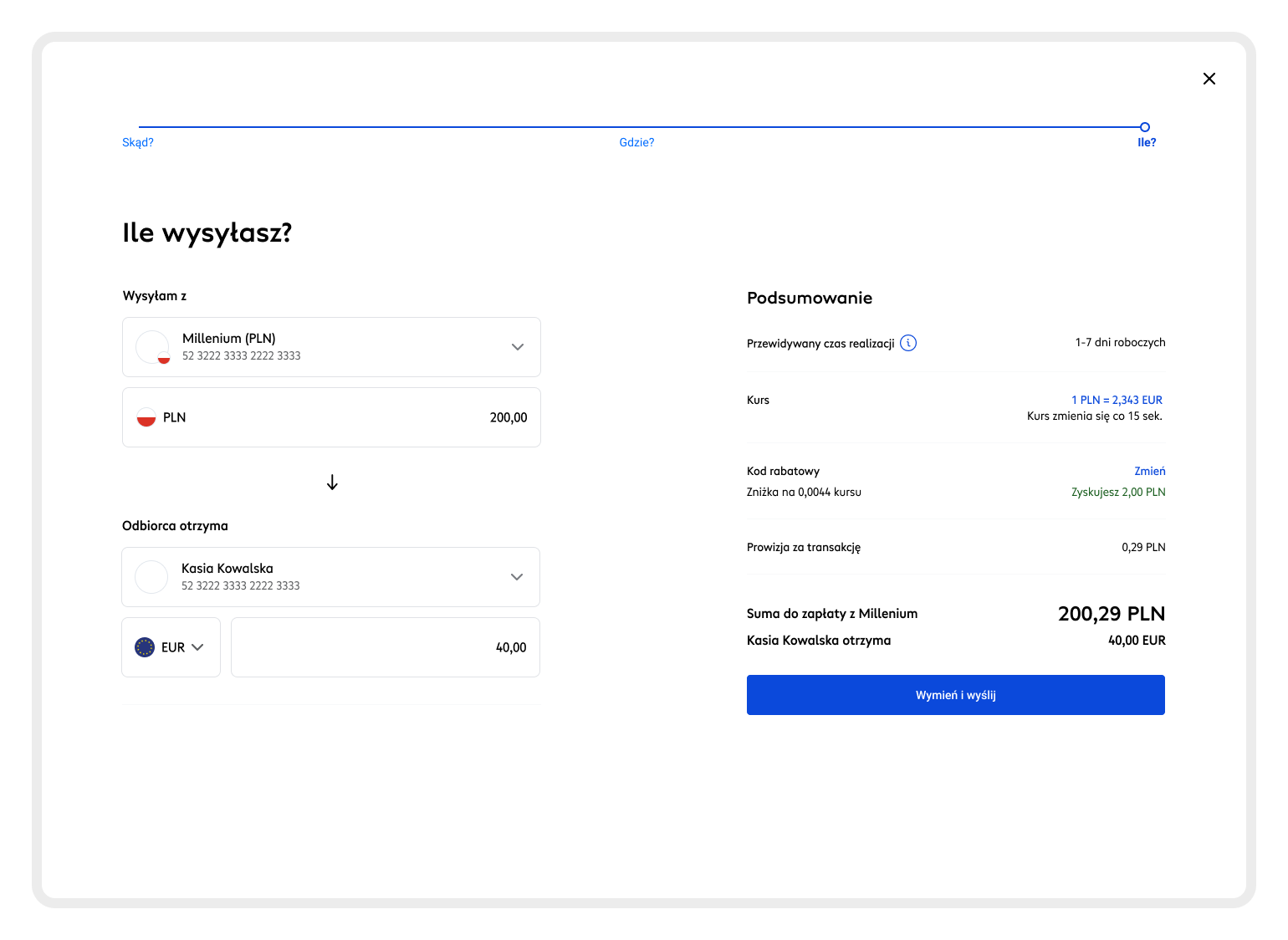
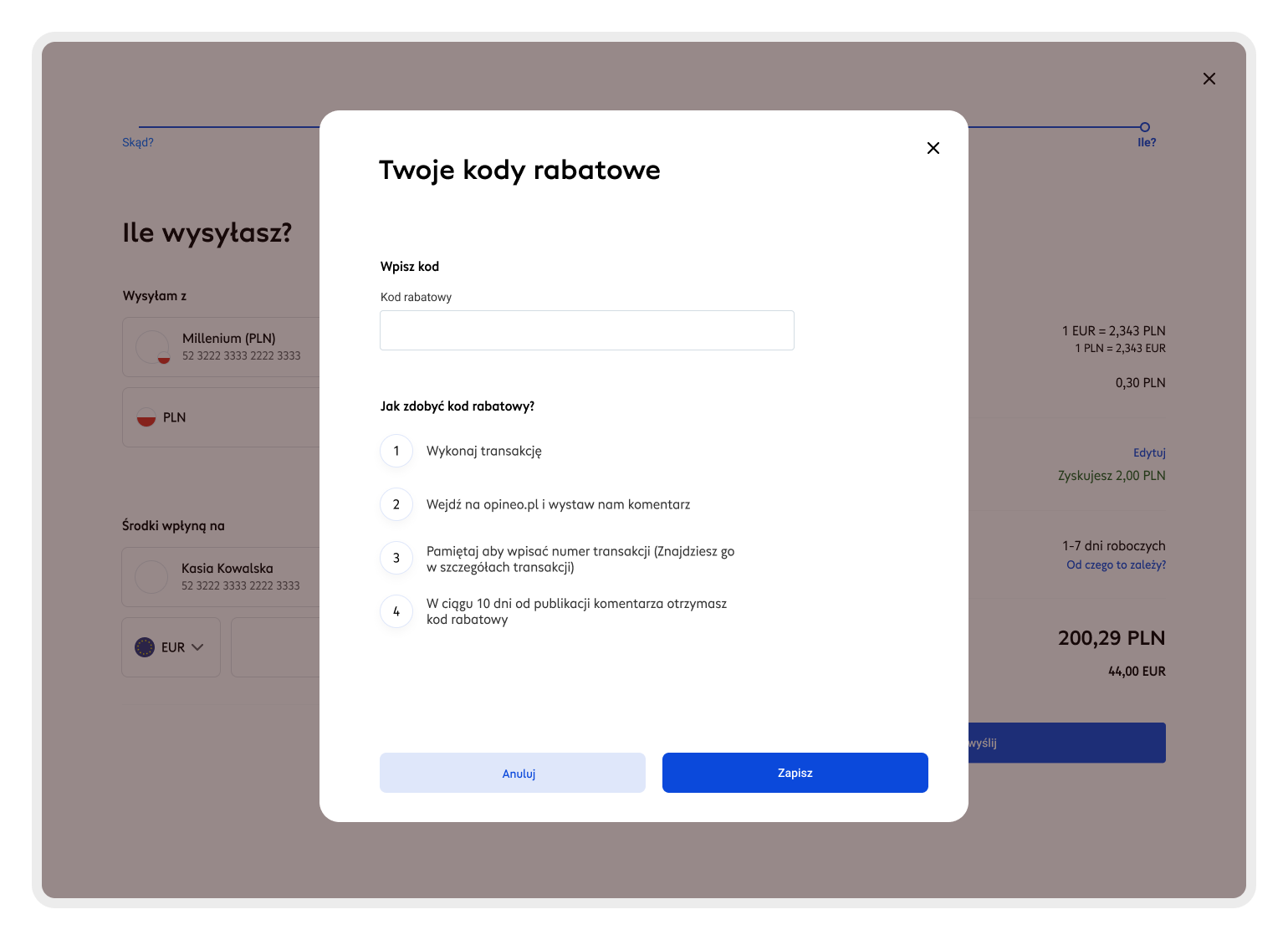
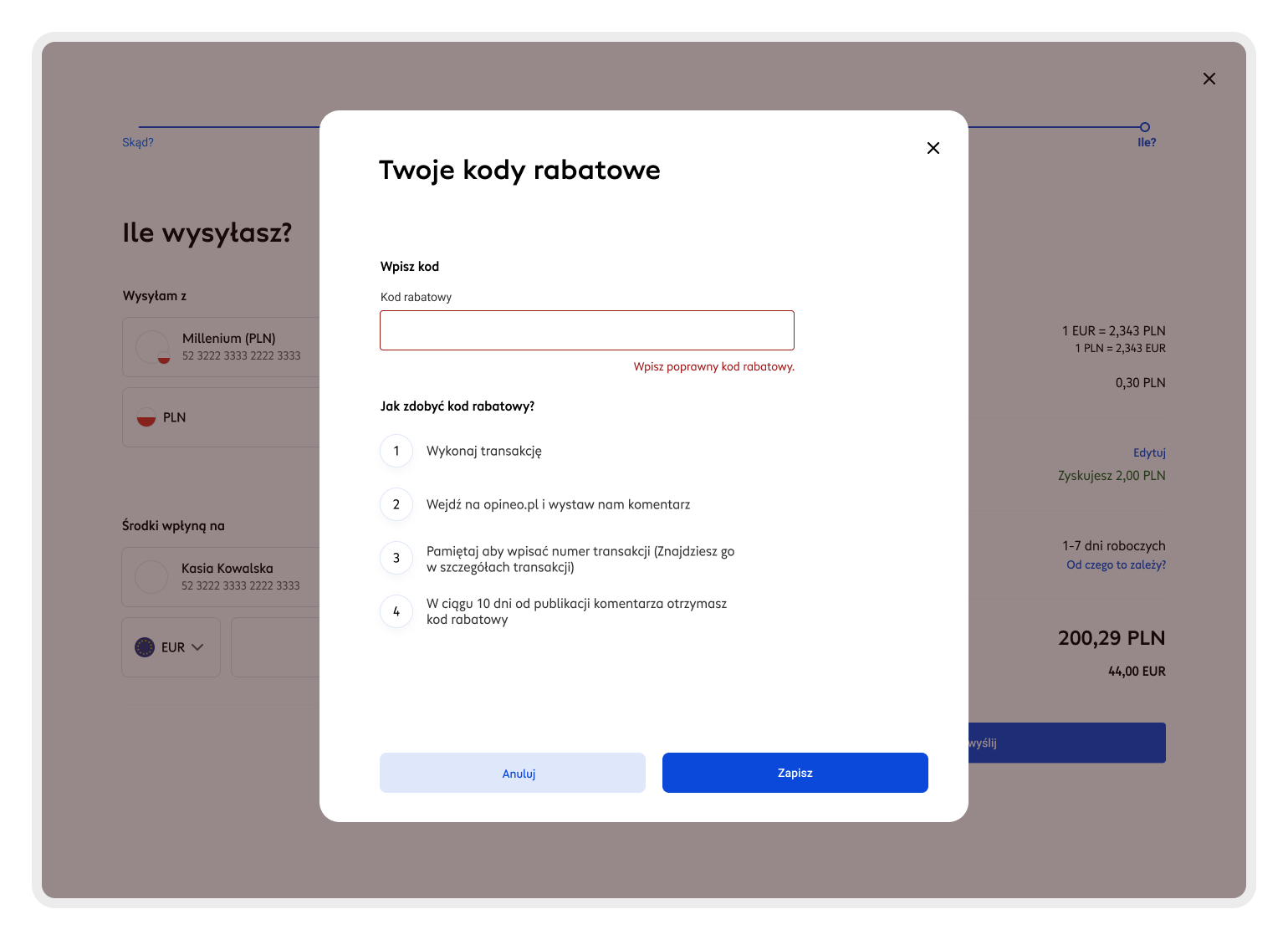
Transaction flow is the most important part of the product. This is where users add funds, exchange currency, and send on.
Concept
Together with a second designer, we prepared the first version of the prototype. It was discussed with stakeholders. During the project, 3 people left the team, including our team leader. I became the leader, and the project was suspended.
Table of contents
Design process
01 UX research
Done
02 Prototype
On hold
03 Usability testing
To do
04 Improvements and release
To do
01 UX research
Research goals
Learn about your competitor’s transaction process.
Discover what design patterns are used in the process of exchanging currency, sending money and topping up the wallet.
Find out what the pain points of the current solution are.
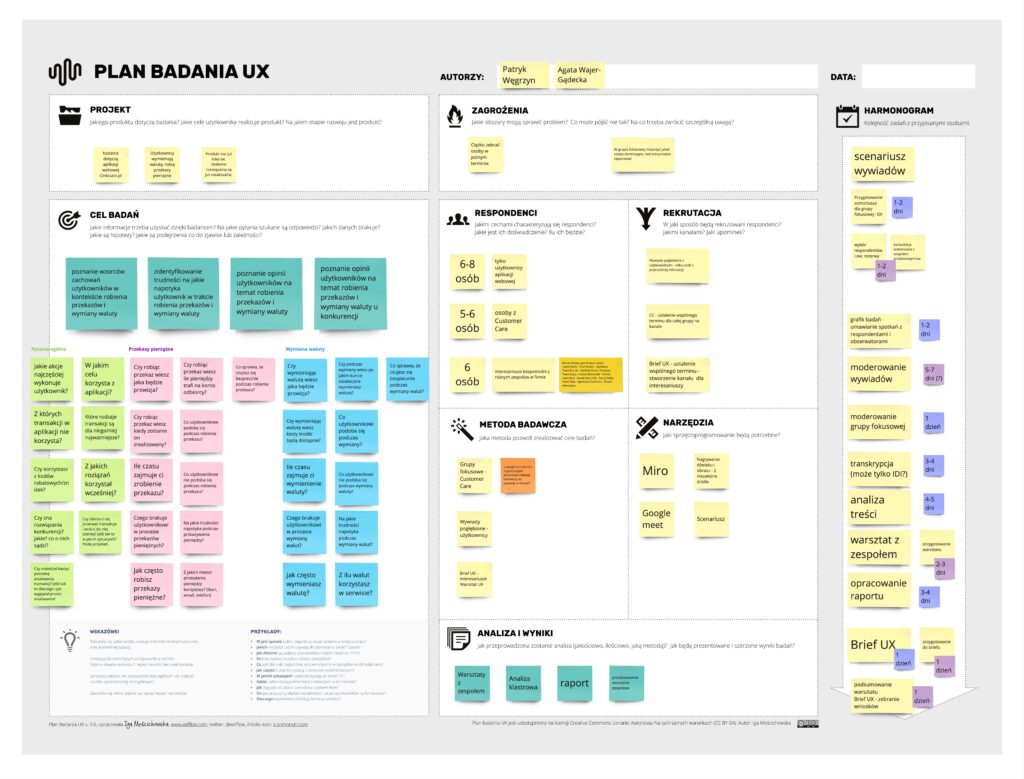
UX research plan | Canva made by Iga Mościchowska Witflow
UX reaserch metods
Desk research
Competitive analysis
In-depth interviews – diads with Customer Care
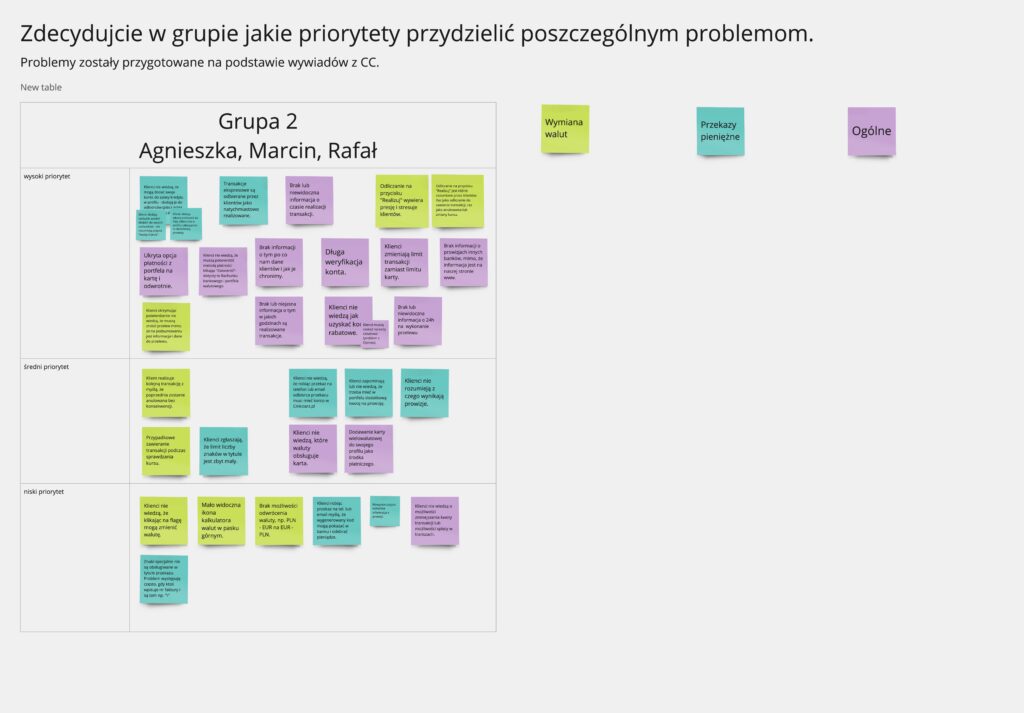
Wokrshop with Customer Care – Eisenhower matrix
Workshop with stakeholder – Eisenhower matrix
Revolut - competetive analysis
Wise - competetive analysis
mBank - competetive analysis
N26 - - competetive analysis
What have I done?
Desk research and competitive analysis
I gathered quantitative data from the big data team – user flow, conversion, transaction time, unusual behavior. I looked for Jira tickets on topics related to the project – tickets from Customer Care, PMs and analysts. I compared the largest competitors in the market – Revolut, Curve, N26, PayPal, Paysend, Wise, Zen.com.
In-depth interviews – diads with Customer Care
3 sessions of 2 people each
interview according to a scenario prepared in collaboration with senior UX researcher
Workshop after IDI
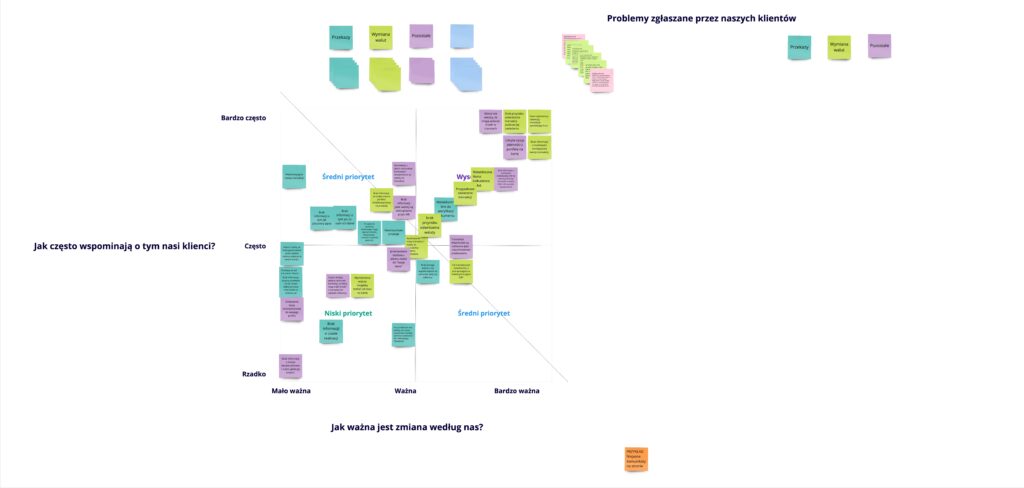
I prepared cards in Miro with the problems from Customer Care submissions and noted during the IDI sessions. Then respondents prioritized them on an Eisenhower matrix. They discussed each problem. The researcher moderated the session, and I handled the cards and asked additional questions.
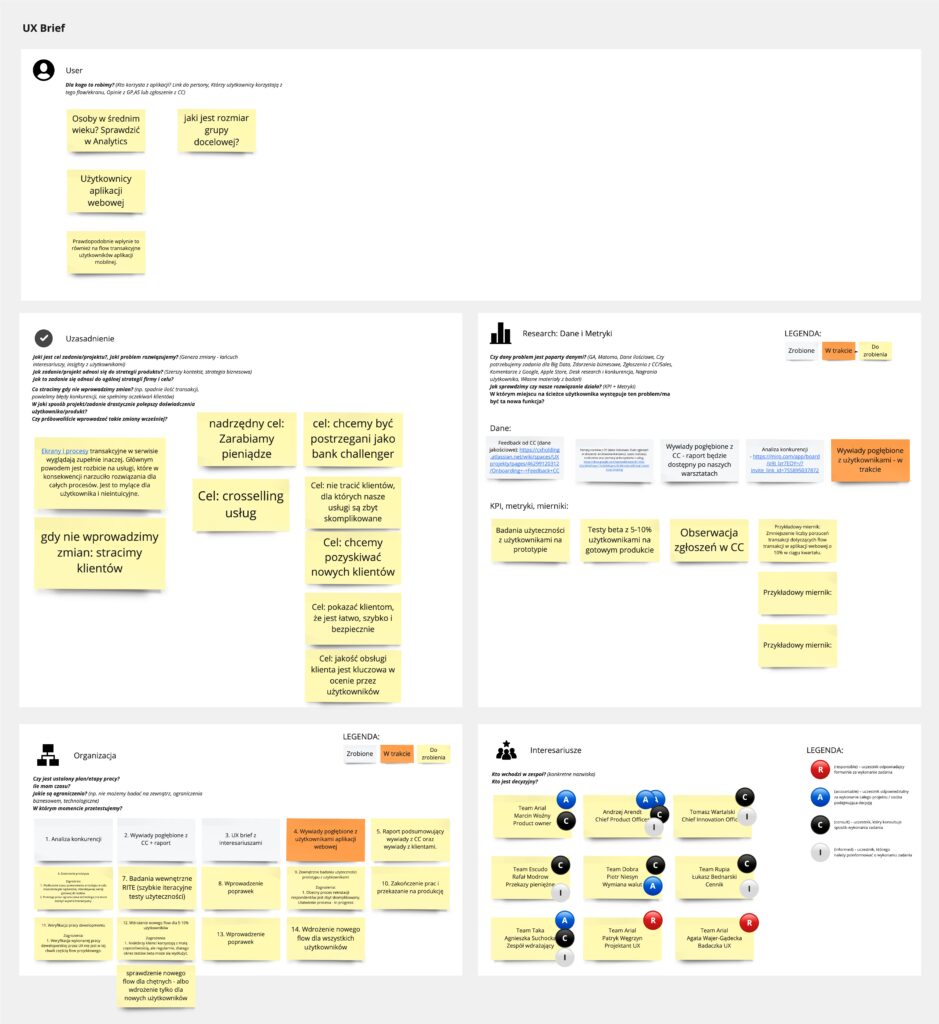
UX brief
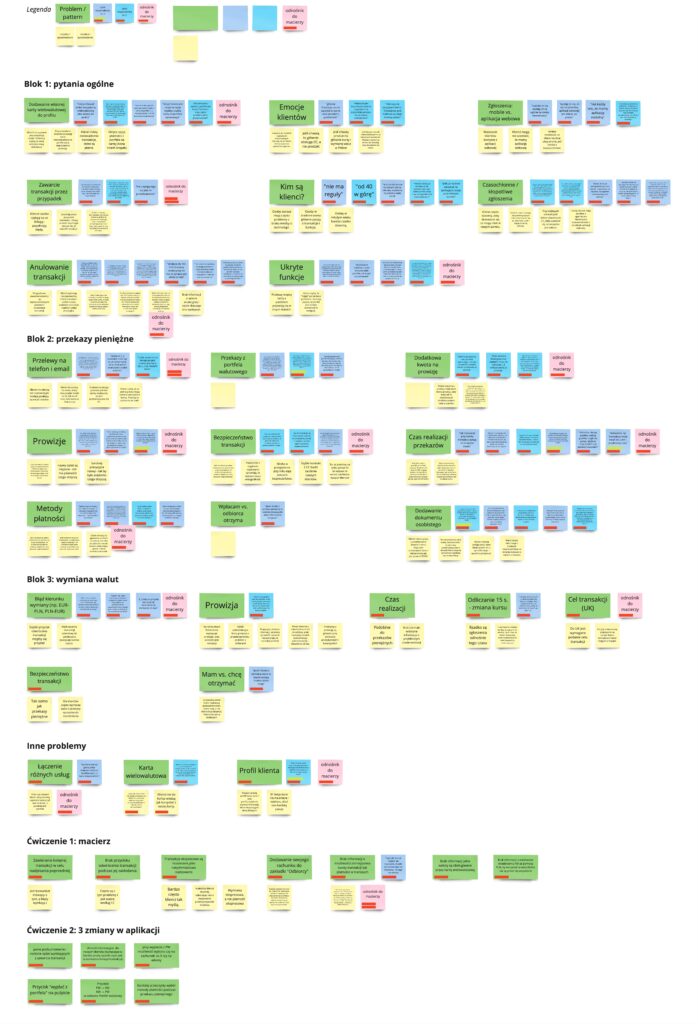
Cluster analysis
Eisenhower matrix used during diads
Worksops with stakeholders
Findings
A recurring pattern is top up, exchange, send.
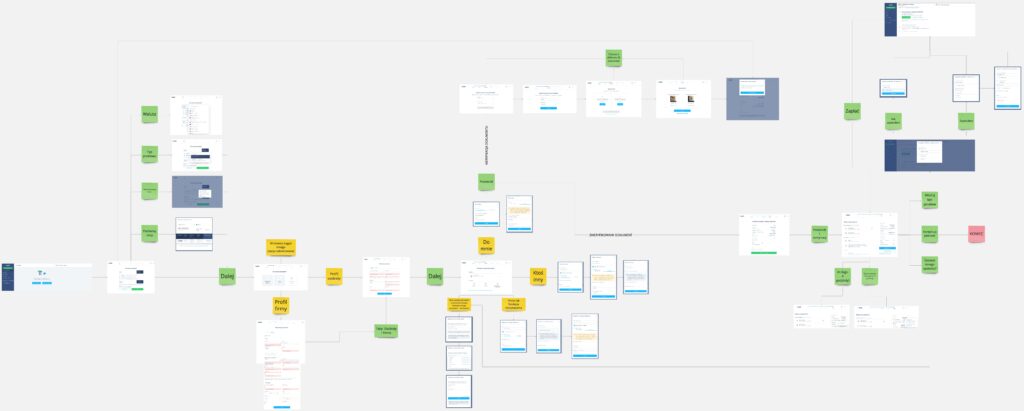
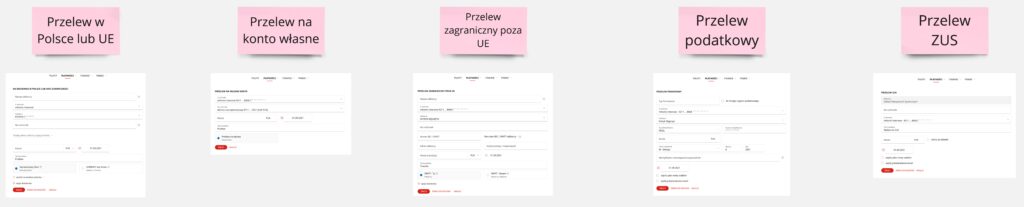
Transaction types do not combine in one process (step wizard) – stakeholders wanted one process for all transaction types from the beginning.
Some of the problems are caused by technological limitations, while others are caused by legal restrictions or company structure.